
Best Ways to Remove Water Stains from Wood With WD-40
Water stains on wood furniture can ruin your home’s appearance. Many homeowners look for quick solutions. One common question is: Does WD-40 remove water stains on wood?
The answer is yes—but only for certain types of stains. In this expert guide by Chelsea’s Cleaning Services, you will learn how it works, when to use it, and what professionals recommend.
Does WD-40 Remove Water Stains on Wood?
Yes, WD-40 can remove water stains on wood, especially white or cloudy stains caused by trapped moisture.
According to cleaning experts and maintenance guidelines from trusted resources like Good Housekeeping Institute, light surface stains can often be removed using gentle household solutions like oils or lubricants.
WD-40 works because it:
- Displaces moisture
- Breaks down residue
- Restores surface shine
However, it does not remove deep or black stains.
Types of Water Stains on Wood Furniture
Understanding stain types helps you choose the right method.
White Water Stains on Wood
- Caused by moisture in the finish
- Appear cloudy or milky
- Easy to remove
- WD-40 works well
Dark Water Stains on Wood
- Penetrate deep into wood
- Hard to remove
- Need sanding or refinishing
For deeper damage, guidance from National Wood Flooring Association suggests professional restoration instead of DIY fixes.
How to Use WD-40 to Remove Water Stains on Wood
Follow these simple steps:
Step 1: Clean the Surface
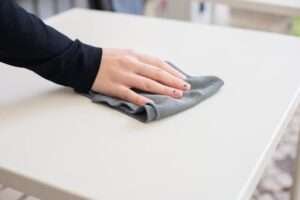
Remove dust using a microfiber cloth.
Step 2: Apply WD-40
Spray a small amount on a cloth (not directly on wood).
Step 3: Rub Gently
Use circular motions.
Step 4: Wipe Excess
Remove residue with a clean cloth.
Step 5: Polish the Surface
Buff to restore shine.
Tip: Always test on a hidden spot first.
For safe cleaning practices, recommendations from Environmental Protection Agency highlight using minimal chemicals and proper ventilation.
Benefits of Using WD-40 on Wood Surfaces
Fast and Easy Solution
No professional tools needed.
Affordable Method
Budget-friendly cleaning option.
Multipurpose Use
Works on stains and residue.
Improves Appearance
Restores shine quickly.
Risks of Using WD-40 on Wood Furniture
Oily Residue
Too much can leave grease.
Not for Raw Wood
Best for sealed surfaces only.
Temporary Fix
Does not repair deep damage.
Finish Damage Risk
Frequent use may dull coatings.
Experts at This Old House recommend limiting chemical use on delicate wood finishes.
Best Alternatives to Remove Water Stains from Wood
If WD-40 does not work, try these:
Mayonnaise Method
Breaks down moisture trapped in finish.
Baking Soda Paste
Removes mild stains gently.
Toothpaste Method
Effective for light marks.
Vinegar and Olive Oil
Natural cleaning solution.
DIY cleaning methods are also commonly recommended by Better Homes & Gardens for safe household cleaning.
When to Call Professional Cleaning Services
You should hire experts if:
- Stains are deep or black
- Finish is damaged
- DIY methods fail
- Furniture is valuable
Chelsea’s Cleaning Services provides:
- Professional wood care
- Safe cleaning solutions
- Long-lasting results
Expert Tips to Prevent Water Stains on Wood
Use Coasters
Protect surfaces from moisture.
Clean Spills Quickly
Avoid long exposure.
Apply Wood Polish
Maintain protective layer.
Control Humidity
Reduce moisture buildup indoors.
Humidity control recommendations are also supported by Centers for Disease Control and Prevention for maintaining healthy indoor conditions.
Why Choose Chelsea’s Cleaning Services
Experienced Team
Skilled professionals.
Safe Methods
No damage to surfaces.
Affordable Pricing
Budget-friendly services.
Trusted Results
High customer satisfaction.
Does WD-40 Remove Water Stains on Wood?
WD-40 is a quick and effective solution for light water stains. It works best on white surface stains. However, it is not suitable for deep damage.
For long-term protection and restoration, professional cleaning is the best choice.